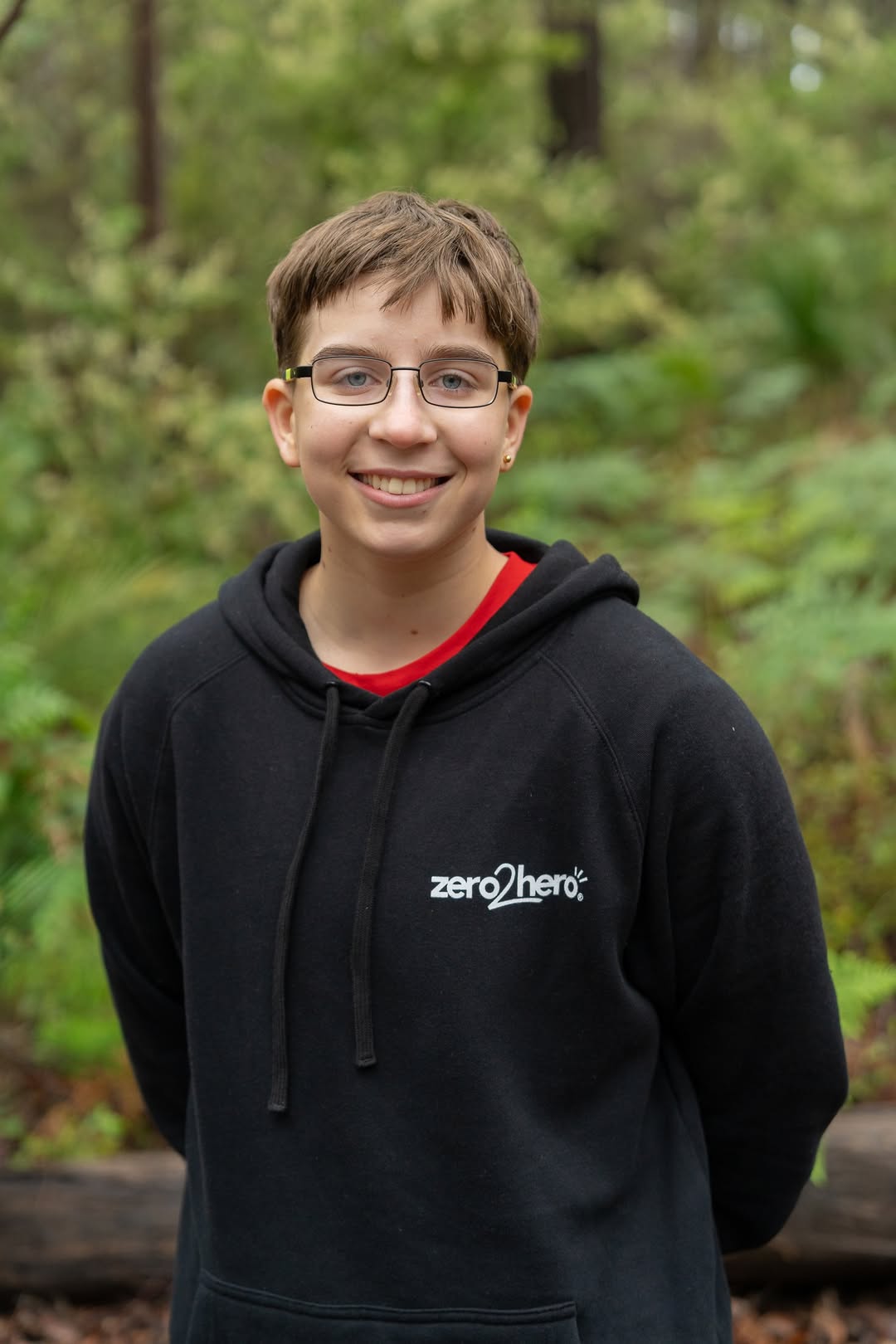
At 17, Amy’s life took a massive turn.
What began as what she thought was a routine urinary tract infection became something far more serious when tests revealed a 5 cm tumour in her bladder. Bladder cancer is extremely rare in people her age (most diagnoses occur in adults over 70) and the news thrust her into a world of specialists, surgeries and uncertainty.
Within weeks, Amy had already undergone multiple procedures and was preparing for a major operation to remove her bladder and reconstruct a new one from her intestine. Through it all, she was forced to confront the possibility that her life might never look the same again, and to reframe what resilience really means.
Prior to her diagnosis, Amy attended Camp Hero. In our chat with Amy, we explore how her camp experience helped her face the toughest challenge of her life, and how that has shaped the way she connects with others.
Can you describe how your Camp Hero experience helped shape your mindset when you first started experiencing symptoms and facing uncertainty?
My experience at Camp Hero gave me a mindset grounded in resilience, perspective, and community. At Camp Hero, I learned how to sit with discomfort instead of immediately trying to escape it. That lesson carried directly into the early days of symptoms and medical testing, when answers were unclear and fear was easy to spiral into. Instead of catastrophising, I focused on what I could control that day like showing up to appointments, asking questions, and taking care of my body and mind. Camp Hero also reinforced the power of support. Being surrounded by people who were honest about struggle yet committed to moving forward reminded me that I didn’t have to face uncertainty alone.
When you received your diagnosis, what were the biggest emotional challenges you faced, and how did you draw on personal resilience to navigate them?
When I received my diagnosis, the biggest emotional challenge wasn’t just the illness itself, but the uncertainty it created around my future. I was in Year 12, and suddenly everything I had been working towards felt out of my control. Instead of focusing on the long-term “what ifs,” I tried to concentrate on small, achievable steps like attending classes when I could, communicating openly with my teachers, and adjusting my expectations without giving up on my goals completely.
How did the Camp Hero community play a role during your treatment and recovery?
The zero2hero community played a significant role during the toughest moments of my treatment and recovery. Knowing I was surrounded by people who genuinely cared, supported one another, and encouraged vulnerability made a huge difference when things felt isolating. The messages of support I received, whether check-ins, encouragement, or reminders that I wasn’t alone from other alumni, was incredible. During my treatment and recovery, I felt a strong responsibility to give back to the zero2hero community that had supported me so deeply.
How has your understanding of resilience and community support changed since your diagnosis and treatment, and how has that influenced the way you support others now?
Going through my diagnosis and treatment led to a major shift in perspective. I realised that you never truly know what someone else is dealing with behind the scenes, which has made me far more empathetic and patient with others. It reminded me that everyone is carrying something, even if it isn’t visible. At the same time, I developed a deep sense of gratitude for the things I once took for granted like my health, routine, independence, and everyday moments. That perspective has stayed with me and now shapes how I move through life, encouraging me to approach others with kindness and to appreciate the small, ordinary things that I know are never guaranteed.
Looking back, what advice would you give to young people going through unexpected challenges?
I would tell young people facing unexpected challenges to take things one step at a time and not feel pressure to have everything figured out. It’s okay to feel scared, frustrated, or overwhelmed. Most importantly, be kind to yourself. Challenges can change your path, but they don’t take away your potential or your ability to move forward.