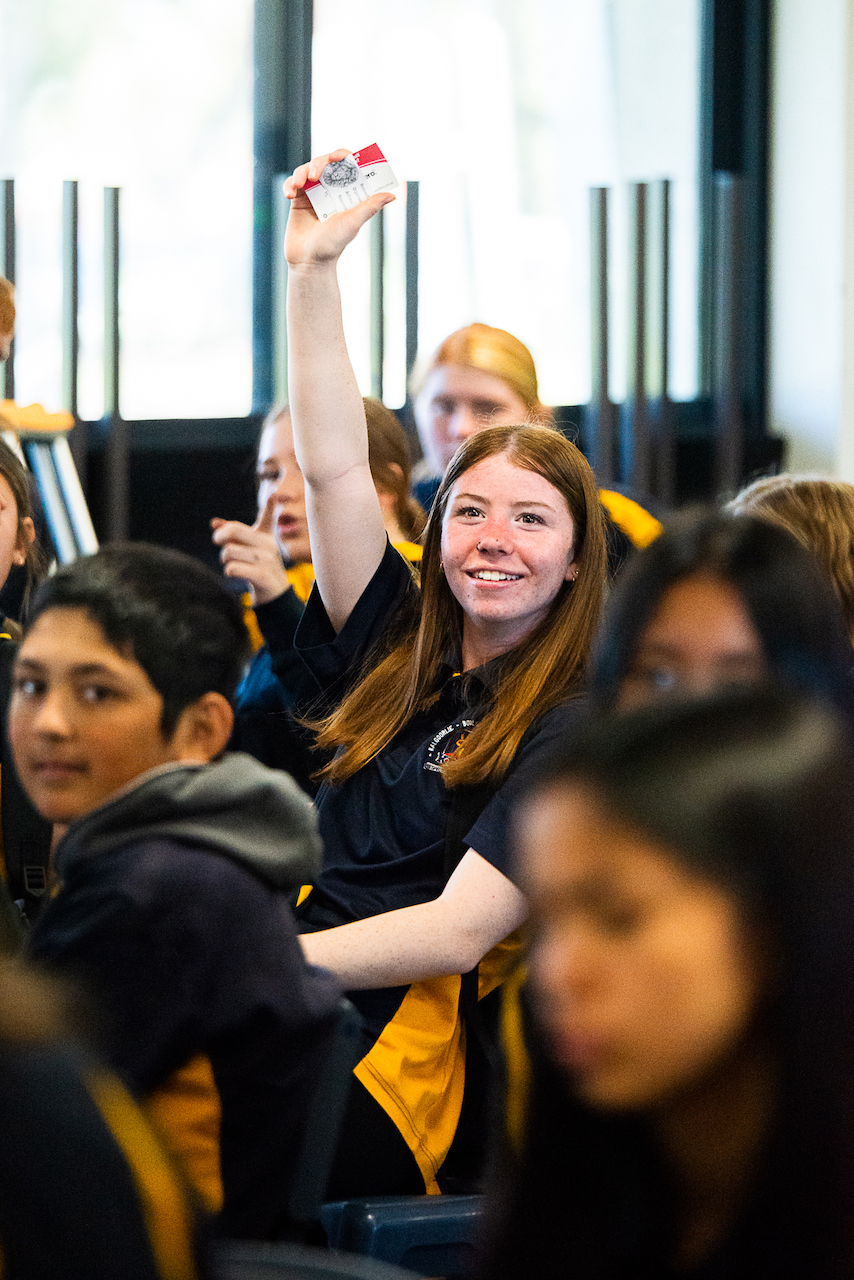
Young people have plenty to say about mental health. The challenge for adults isn’t simply getting them to talk – it’s creating conversations they genuinely want to be part of.
Last month, we brought together more than 2,200 students and teachers from 78 schools at our In Your Head events in Perth and Kalgoorlie for two big days of honest conversations, inspiring speakers, interactive sessions and plenty of fun, all centred around young people and their mental health.
For our CEO, Ashlee Harrison, one of the strongest takeaways was simple: young people are willing to talk about mental health when the conversation feels relevant and they’re genuinely invited into it.
“Young people aren’t short of things to say, especially when we actually ask them. They’re more than willing to talk about mental health, and most things for that matter. The real question is whether we’re creating a conversation they want to be part of,” Ashlee said.
“When they feel safe, respected and like we genuinely care about what they think, they happily engage. And the conversations get very real, very quickly.”
So, what did we learn from bringing more than 2,200 young people and educators together to talk about mental health?
Here are three of our biggest takeaways.
1. Trust comes before honesty
One of the most interesting things we observed was how conversations changed as students became more comfortable throughout the day.
Our Senior Facilitator, Stuart Hayward, noticed that while the initial questions about mental health were relatively broad, they became more complex and personal as trust developed and students realised they were genuinely being invited into the conversation.
Questions shifted from general discussions about stress and wellbeing to how to know when a friend genuinely needs help, what to do when someone refuses support, and how to start a conversation when you know something isn’t right.
“You could almost feel the point when students realised, ‘Okay, we are safe to actually talk about this here,’” Stuart said.
“Once that happened, the questions changed. They became more honest and more nuanced, and you start hearing about the situations young people are actually navigating rather than the answers they think adults want to hear.
“Create trust and psychological safety, and the quality of the conversation changes.”
For educators and other adults working with young people, it’s an important reminder that silence doesn’t necessarily mean disengagement.
Young people may need time to work out whether a conversation, and the adults leading it, feels safe and genuine before deciding how much of themselves they are willing to bring to it.
Creating space for questions, allowing time for trust to develop and providing opportunities to continue conversations later can therefore be just as important as the information we deliver.
2. Students want to participate, not just listen
Another recurring observation across In Your Head was the difference between asking students to listen to a conversation about mental health and actually giving them the opportunity to shape it.
While keynote presentations helped introduce ideas, experiences and important information, some of the strongest engagement happened through breakout sessions and smaller conversations where students could ask questions, respond and share their own perspectives.
Youth Engagement and Support Worker Rose Dib-Milston, who attended In Your Head with students from Armadale Senior High School, saw that shift firsthand.
“I was really impressed by both the quantity and quality of questions coming from the students. When they were given the opportunity to ask their own questions and talk through situations that felt relevant to them, they were curious, engaged and really added to the conversation,” Rose said.
“The student voice was so strong, and there was so much value in giving them the space to ask the questions that mattered to them.”
Mental health education has traditionally relied heavily on adults providing young people with information – how to recognise warning signs, where to seek help and strategies for looking after their wellbeing.
That knowledge is important. But at In Your Head, we saw the value of going one step further.
Students weren’t just being given information about mental health, they were questioning it, discussing it and working out what it meant for their own lives and the situations they may face with their friends.
Creating opportunities for students to participate in the conversation can help turn information into knowledge and skills they can actually use – something that can extend well beyond a one-day event and into classrooms, friendship groups and everyday life.
3. Serious conversations don’t always need a serious atmosphere
Perhaps one of the more surprising lessons from In Your Head was that meaningful mental health education doesn’t have to feel heavy.
Students moved between conversations about anxiety, loneliness, help-seeking and suicide prevention in an environment also filled with humour, activities, music, connection and plenty of fun.
Rather than taking away from the seriousness of the subject matter, we believe creating an environment young people actually want to be part of can make difficult topics feel more approachable.
“Mental health is serious, but that doesn’t mean every conversation we have about it has to feel sombre or clinical,” Ashlee said.
“Young people can laugh, connect with their friends and enjoy themselves, and then five minutes later ask an incredibly thoughtful question about something they’re struggling with. Those things aren’t contradictory.
“If anything, creating that sense of connection can make the harder conversations easier to have.”
For schools, it’s worth considering what mental health education can look and feel like.
A conversation can be meaningful without being confronting. It can involve humour without trivialising the subject. And students can enjoy participating while still walking away with a deeper understanding of their own mental health and how to support someone else.
The conversation can’t end here
Of course, one event cannot provide everything a young person needs to understand and positively manage their mental health.
The bigger opportunity is what happens afterwards – in classrooms, at sporting clubs, between friends and in the everyday interactions young people have with trusted adults.
Events like In Your Head can help open the door, but we believe mental health education needs to continue throughout a young person’s school years.
“The more opportunities we give young people to talk about mental health, ask questions, build their literacy and practice help-seeking, the more normal those conversations become and the more confident they are to act when something isn’t right,” Ashlee said.
“Awareness matters, but awareness without action won’t get us where we need to go. Ultimately, we want young people to recognise when they need support, know what to do next and feel safe enough to do it.”
If there was one overarching lesson we took from bringing more than 2,200 students and teachers together, it was a simple one – young people are ready to talk. Our job is to make sure we’re creating conversations they actually want to be part of.